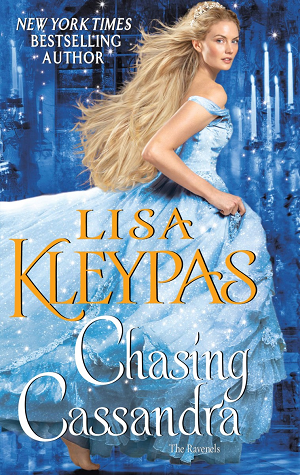

Cassandra’s eyebrows are overplucked to all hell, but otherwise, grading on the Ravenel cover curve (i.e. “How much does this look like a prom dress from 2011?”), this cover is perfectly fine. I feel like it was a stock photo meant to be used for a retelling of “Cinderella”, but the lone bare foot is still a reference to an actual scene from this book, and…well, that’s the only compliment I have to give. It’s something, though, don’t you think?
And hey, we made it!…is what I wrote in this draft when I first started working on it in 2020, as yet unaware that there would be, in fact, a seventh book in this series. Jesus. This is like when Tori Amos went through a slump in the 2000s, but she kept putting out albums in hopes that the next one would be better, but instead they actually kept getting worse. (I love Tori Amos with my entire being, do not @ me, and I will passionately defend her 2010s renaissance to the death, but like…The Beekeeper followed by American Doll Posse followed by Abnormally Attracted to Sin followed by Midwinter Graces? Oof.) So this is only the penultimate book in the series, not that it particularly feels like it’s leading to a conclusion.
Anyway, it took me a while to get around to reading this book, because like…I just straight-up stopped really caring about this series. It’s sad, because I do enjoy — or start out enjoying — almost everything I recap here; my goal is generally to joke with affection, you know? But…the more time stretched on, the more I looked back and was like, “Damn, I really did start losing interest in these books with Devil in Spring.” (As I’ve mentioned, I did like Hello Stranger, but it still had some kind of weird dissonance about it that didn’t match the energy of the first two books in the series.)
Tragically, this book does not manage to turn things around. I mean, it’s marginally better than Devil in Spring and Devil’s Daughter, in that the two main characters of this book aren’t obnoxiously self-centered about their relationship, but it’s still got all the hallmarks of this series’ bullshit — a heroine who acts like a preteen, a hero who reforms for no reason and through no development that we see at all, and an incredibly thin plot. I actually had to reread this book because when I finished I was like, “Am I crazy, or does literally nothing important happen in the entire book?” Having reread, I’ll admit that the book does have a plot — it’s just that the pace is so weird, and the events treated so tepidly, that it feels like not much is happening at all. It took me an equally long amount of time to start writing about this book, too, because the idea of going over everything I wish had been different and verbalizing why I didn’t like it was super daunting.
We find ourselves, for the third time, at Gabriel and Pandora’s wedding. Jesus. This is my personal Groundhog Day. Anyway, Tom Severin is emoing his way around Eversby Priory. He’s all salty about how he thinks marriage and living in the countryside are for losers, and once, the Ravenel brothers would have agreed with him, but now Devon and West are boring and they have back problems and they go to bed at 10 PM. I mean…that’s called being in your thirties, Tom.
And yet! As lame as he thinks settling down is, for some reason, blackjack and hookers don’t make Tom happy anymore either. He wonders what could possibly be wrong with him, then decides that perhaps he’s just getting too old for the club. Maybe he should get married and have a kid after all! In fact, maybe he should marry the third Ravenel sister — not that he’s ever met her, but she’s at this wedding and he’s heard that she’s single! Wow, that was fast.
Conveniently, Tom goes into a random room in the house and immediately encounters Cassandra, though they don’t see each other at first. He’s skulking in a corner and overhears Cassandra crying to West that she hasn’t met anyone during her Seasons, and she’s going to die alone with twenty cats. West is very sweet and comforting with Cassandra — Tom even notes that West sounds “warmer and more tender” than he’s ever heard him — and once more I am salty that Lisa Kleypas chose not to put them together. “On all levels except physical, we are basically married” is one of my favorite romance tropes, and I think it would’ve dovetailed really nicely with West’s development into a farmer who takes care of the estate, with Cassandra as a near-spinster who has to run the house because she’s the last blood relative still living there. (The fact that West and Cassandra are the ones that meet Ransom at the house in book #4, implying that they’re the heads of the household when Devon and Kathleen are away — with West calling Cassandra “darling” to boot — did nothing to deter me from wanting this, let me tell you.) Oh, well.
Anyway, Cassandra asks West if he’ll marry her if they’re both still single when she’s 25, and West rejects her. Tom catches sight of her and immediately falls in love for no reason — seriously, we’re told that “The sight of her dealt him a famished, hollow feeling. She was everything he’d missed in his disadvantaged youth, every lost hope and opportunity” which like…how? What does that even mean? Whatever. Tom offers to marry Cassandra instead, and she’s weirded out by this random dude just popping out of the shadows and telling her that he wants to bind them together legally forever.
West shoos Cassandra out of the room so that the menfolk can discuss handing her over. Not in so many words. West is like, “I know you’re a cold-hearted rake, Severin, step off my virginal romance heroine cousin.” Tom is SUPER WEIRD about it and says, “Can I have her? I have to have her, let me have her.” Is this supposed to be romantic? West tells Tom that he knows that all Tom cares about is the chase (haha, like the title of the book, get it); as soon as Tom obtains whatever he wants, he loses interest in it, be it houses or business acquisitions or women. Tom’s like, “Yes, but I am about to change my ways because I am now the hero of a romance novel.”
We cut to Cassandra’s POV. She’s hiding out on some stairs and crying over her sister leaving her to get married. Tom finds her and she asks him to stay and chat. He tells her about how he’s a nihilist and can’t differentiate between right and wrong — and also doesn’t want to (dreamy?) — and is cursed with having a photographic memory which means he thinks too much and can’t feel love. ~*~Welcome to my twisted mind~*~
Tom tells Cassandra that, while he won’t ever fall in love with her because he’s a cold-hearted rake, he’s rich and not a total dick, so how about it? Romantic! Cassandra is confused by his interest in her, as she admits that she feels less exciting than (and inferior to) Pandora.
On paper, I like Cassandra a lot, and I did like her when she appeared as a background character in other books. Cassandra is essentially the “other girl” that the typical “not like the other girls” protagonist is contrasted against — she’s not adventurous or brave; she enjoys domesticity and doesn’t have any skills or interests that are immediately impressive. I’ve always had a soft spot for characters like her — apart from the sexism of implying “other girls” are dumb and shallow, the “not like the other girls” trope is also just…lazy writing. The hero never has to grow and learn to look beyond the surface in people; instead, he gets the instant satisfaction of being impressed by an exceptional woman right off the bat. I’ve never found being judgmental or contemptuous to be very attractive character traits; characters being rewarded for this behavior is an equally unattractive arc (or lack thereof) to me.
Except, of course, Tom has decided to be impressed by Cassandra anyway, without any explanation apart from him saying, “Haven’t you ever liked someone or something right away, without knowing exactly why, but feeling sure you would discover the reasons later?” Sure. Why not.
Cassandra is all, “I know you’re a cold-hearted rake, but I think you can be reformed! It happens in novels all the time!” Tom laughs at her for being naive. Oh goody, the heroine is being incredibly unworldly and the hero is treating her like a literal child. That’s what I’ve missed most about reading these books! Anyway, Tom doesn’t think you can learn anything from fiction, so Cassandra says she’ll find a book to change his mind. At the end of the conversation, Tom tells Cassandra that his heart “just thawed a little.” Sigh. Part of my love for the Rake/Fragile Virgin trope is the (relative) slow burn of it; the way the two of them fight their attraction and have to overcome their preconceptions to even begin seeing each other in a romantic light. Tom — a character who was introduced as being nearly literally incapable of feeling emotion — starting to fall in love after a five-minute conversation totally undercuts the tension and anticipation of their potential relationship.
Whatever. Cassandra returns to the party and her chaperone, who reminds her that her reputation will be damaged if she doesn’t get married by this Season. This is partly a cliffhanger and partly an excuse for Lisa Kleypas to name-check the brothers Marsden (sons of past Wallflowers couple Marcus and Lillian; their sister also got a cameo in Devil’s Daughter) as eligible bachelors.
Tom goes to Devon to once again ask the Ravenel men to “give” Cassandra to him, and Devon’s like, “No, because you are being super weird about this and I don’t want her to go to a second location with you.” Not in so many words. Devon exposits to Tom about Cassandra and Pandora being neglected as children, which makes Tom feel bad. He’s all, “Omg, am I experiencing emotions? Am I no longer a cold-hearted rake?”
A servant comes in to tell Devon that their kitchen boiler is busted, and Tom takes it upon himself to fix it. Cassandra comes upon him and is all twitterpated by his rolled-up shirtsleeves and sweaty forearms. She’s also brought him Around the World in 80 Days as a book recommendation. They get to chatting and Tom tells her about his traumatic childhood and how his father abandoned him when he was young, so he started working to support his mother and sisters. He did a lot of manual labor in the general field of machinery and steam engineering because it’s the 1870s and the future is now, eventually working his way up to the business end of things. Cassandra is impressed by his self-made-man-ness (I bet she would fall for so many tech bros today), but their conversation is interrupted by Devon. He hustles Cassandra away and warns her that Tom is a dick and she can’t change him. After Tom leaves, Cassandra sees that he left her book behind, and she’s like, “I guess he is a cold-hearted rake after all :(“
Three months later, Tom is back in London, still lusting after Cassandra. He muses that working on the boiler was the first time in a while that he’s felt a purpose in life and reminisces about how he pulled himself out of lower-classness by his bootstraps. One day, his hat blows off and is picked up by a street urchin. Tom figures the kid’s going to steal the hat and sell it, but the kid in fact returns the hat, insisting that he’s not a thief. Tom’s all like, “OMG he’s lower-class but has the potential to become a productive member of society! He’s just like me!” His heart newly softened by the power of love, Tom decides to take the boy (“Bazzle”, which I’m assuming is “Basil” phonetically) on as an assistant instead of just leaving him in the gutter. Child labor is the best way to show you care about the poor <3
The next month, Tom attends West and Phoebe’s wedding. Although he doesn’t particularly want to socialize with all the basics, standing around and feeling superior doesn’t make him happy anymore either, so he might as well mingle. When he sees West and Phoebe, he anvils about how happy and perfect they are together and then one of Phoebe’s kids calls West “Dad” and West cries and I throw up in my mouth a little.
Cassandra shows up and is all snippy with Tom for blowing her book recommendation off. Tom reveals that he did in fact read Around the World in 80 Days, and he totally got the book’s point about how timezones work, yes, very amusing. Cassandra laughs at him for not understanding the actual theme of the book. I like this bit! It’s a relief to see that Cassandra’s not so unworldly that Tom has to school her in literally everything, and there’s some lighthearted banter that makes them feel more like equals, for this one scene at least.
Phoebe observes their little exchange and unsubtly tells Tom that she too once felt attracted to someone who she thought was totally unsuited for her, but then he turned out to be perfectly suited for her after all, so perhaps Tom shouldn’t fight this feeling (not to quote REO Speedwagon). She then suggests that he read Persuasion next, as he might find that he has a lot in common with Captain Wentworth. Tom: “Probably not much, since I exist and he doesn’t.” HEE!
At dinner, Cassandra complains to Pandora about having to watch her weight because the society men will pick apart her physical appearance during the Season. I mention this for two reasons: one, Cassandra’s weight is a running concern of hers throughout the series, and yet, you may have noticed that the model on the cover’s got her clavicle poking out of her shoulder. Oh, romance novels. Second, Gabriel then says that men don’t talk like that, but “arsewits” do. #NotAllMen! Also, this is rich coming from a dude who lost his shit every time Pandora remotely expressed interest in leaving his side to work on her own hobbies.
Cassandra loses a shoe at dinner (like the cover, get it?) and Tom comes to her rescue. The two of them sneak out to the conservatory and make out and dance and talk about how much they like each other but they can’t be together because Tom’s a cold-hearted rake. It’s not compelling at all. Like, look, we are less than 10 chapters into this story and have already established that these two like each other, their feelings are mutual, and there are no external obstacles to them being together. The only thing keeping them from being together is Tom’s refusal to admit that he’s feeling feelings, despite also frequently acknowledging that his cold-hearted rakeness is thawing and being fully aware that he’s feeling some kind of new emotion (not to quote Eurythmics).
I mean, I think I can kind of see what’s supposed to be going on: Tom supposedly only obsessed with Cassandra because of the chase, like she’s an object he’s fixated on, and he hasn’t properly fallen in love yet (or at least, he doesn’t think he has). The trouble with that, though, is that Tom keeps thinking about how he feels different and he has never wanted anyone like Cassandra and she makes him feel things he has never felt before, therefore he refuses to actually chase Cassandra because he’d ruin her with his cold-hearted rakitude. And no one is ever like, “Tom, you say you want to be with Cassandra forever, but you said that about the last woman you hooked up with,” which would support the idea that this is how Tom behaves when he’s chasing a woman. As it stands, it reads like he’s already changed his behavior for love. I suspect the book doesn’t really want to show the hero genuinely objectifying the heroine, so it’s making Tom softer and more romantic from the start, but with the consequence that it’s really hard to understand why he won’t just man up and admit he’s not actually an unfeeling sociopath.
Whatever. A few months(?) later, Tom receives a proposition from an impoverished aristocratic family, who want to marry their daughter off to him. Tom decides to move on with his life and court her, except like three chapters later she makes fun of Cassandra at a ball so Tom dumps her. God forbid we let the tension in this story build or anything.
One day in his office, Tom realizes Bazzle has lice and hauls him to Winterborne’s store to get deloused by Dr. Gibson. Cassandra happens to be there, visiting Dr. Gibson, and decides to help clean Bazzle up. She sings a bunch of songs with childish titles that I think are meant to be endearing but are kind of corny, like “My Dog Thinks He’s a Chicken”. I don’t know, the phrasing of these songs feels kind of anachronistic to me, and it feels silly in a way I don’t really expect Kleypas’s books to be. This is the kind of thing I’d expect from a Tessa Dare book — which is not an insult, I also love Tessa Dare! But she has a different style and Kleypas doesn’t lean into this kind of silliness consistently, so it just feels jarring when it comes up. Anyway, Tom is charmed by how good Cassandra is with children, and he’s all like, “He’d been taken apart by her and reassembled differently. Outwardly, everything seemed to work well enough, but he wasn’t the same inside.” Then he’s like, “Hmm I still don’t think I can feel love tho :>”
Cassandra suggests that Tom take Bazzle in as a ward, which offends Tom. He’s like, “Are you just saying that because you think we’re both poor?” and Cassandra’s like, “Kind of, tbh.” Tom points out that while he wasn’t born into nobility, he wasn’t, like, picking-lice-out-of-his-hair-in-a-St.-Giles-rookery levels of poor, either. Cassandra insists she doesn’t think of Tom as being beneath her, and his constant idolization of her is a him problem (although she’s not quite so pointed about it). This is another scene I like quite a bit; it’s a realistic conflict that might genuinely get in the way of their relationship and again, they feel more like equals when they’re able to argue.
Alright, we’re about halfway through the book, which means it’s time for the plot to show up. During the like ten pages when Tom was dating that aristocrat chick, Cassandra decided to also move on with some rich dude. She dates a guy named Lord Lambert for a while, and she thinks that he seems okay, but kind of entitled. His father is also super creepy and hits on Cassandra in front of his son. This all comes to a head one day when Lord Lambert tries to rape Cassandra while she’s visiting his home, arguing that she has big boobs so, you know, that’s just asking for it. Oh, ouch. This is sadly pretty realistic and relatable, and it’s written quite well, I think. The thread of Cassandra’s weight and figure is woven well throughout the background of all the books, but the idea that men are perving on her is actually never brought up, so this moment feels like an actual twist — and yet it makes a sad amount of sense when it happens. The lack of telegraphing and anvils about the issue also makes the moment feel sobering rather than preachy.
Cassandra refuses to see Lambert again, so his family gets revenge by planting gossip in the newspaper that Cassandra is loose and led Lambert on. Papa Lambert comes to see the Ravenels one day, offering to make it go away if Cassandra marries him, and everyone realizes that Papa Lambert is the one spreading rumors about Cassandra because he wants her for himself. Gross. (Although love that Helen is the one who makes the deduction that the gossip author sounds like a parent. My kingdom for Helen and Garrett being Victorian lady detectives!!)
Tom finds out about the rumors from Gabriel, who’s all offended on Cassandra’s behalf that Lambert would dare feel entitled to her. Book, stop trying to convince me that Gabriel respects women, because I know he doesn’t. So Tom goes swanning over to the Ravenels, announcing that he’s bought the newspaper so Papa Lambert can’t use it as his mouthpiece anymore and also he wants to marry Cassandra, so the problem of her reputation is solved. It’s meant to be all Big Damn Heroes but…it falls flat for me, I’m afraid. I just am not really attracted to guys who think throwing money at a problem solves it, and I can’t help but feel it would be more romantic if Tom simply offered to marry Cassandra without swinging his dick around about how powerful he is.
Also like, maybe it’s because I am A Poor, but my God manage your finances better, Tom! I would never marry a man who was so frivolous with his savings.
Anyway, he and Cassandra have some back and forth about how he never wants to get married because he’s a cold-hearted rake but he’s not really that cold-hearted anymore because of her but also he still thinks they’d make each other miserable because he can’t feel love, kind of sort of not really and OH MY GOD, WHATEVER. Tom tells Cassandra that their marriage will be very businesslike and cordial, because love is overrated. He knows this because “What good did Heathcliff and all his passionate foaming at the mouth do for Cathy?” and also “Jane Eyre [was] an otherwise sensible woman so dazzled by lovemaking, she didn’t happen to notice the scurrying of an arsonous madwoman overheard.” HEE! You’re right, Tom; the Brontës and their consequences have been a disaster for society.
Cassandra is shocked that Tom has been reading novels and she’s like, “I’m fixing him already!” Then he says he doesn’t care about her weight and she’s like “That’s hot” and he fingers her in the library, as one does. Cassandra agrees to marry him and they decide to draw up a contract re: what their house will look like and how many hours a day Tom has to show her affection.
But first, Cassandra has to convince her family, whom you’ll recall all hate Severin for trying to steal the plotonium stored on their land and for standing back and being sarcastic when West was about to get shot that time. (I respect him for the latter tbh.) West protests against the marriage because he and Cassandra are for real and they have some banter that’s far more energetic than anything with their respective love interests:
“I beg your pardon for being a facetious arse. But I know both of you well enough to be certain you don’t belong together.”
Cassandra met his gaze without blinking. “Is it possible that Mr. Severin and I might know each other in a different way than you know either of us?”
“Touché. Is it possible that you might think you know him far less than you actually do?”
“Touché,” Cassandra replied reluctantly.
Devon says that if Cassandra works out her contract with Tom and still wants to marry him, he’ll consent to the match. Tom and Cassandra proceed to draw up the contract, bantering and expositing about their backstories as they do so. Tom reveals that his father briefly came back into his life after Tom got rich; Tom offered him a choice between seeing the rest of the family or taking a ton of money to stay away from them forever. His father chose the money over his family, but Tom’s mother didn’t see it that way, and blames Tom for driving him away. Tom’s sisters still talk to him, but only occasionally. Tom also reveals he was abandoned by his second father figure, who took Tom in when he was a young apprentice, for reasons that will probably be revealed later. Cassandra is once again all heartwarmed by his difficult childhood. They work through the contract and don’t come up against anything dealbreaking, so they get engaged and married. We are now 80% of the way through the book; the main couple is married, the evil rumors have been defeated (or at least not brought up again), and the Ravenels have begrudgingly accepted Tom. Let’s see what we could possibly spend the remaining 20% on!
First: Cassandra and Tom’s honeymoon, wherein they have lots of sex and there’s lots of gratuitous descriptions of how rich Tom is and how luxurious their train is. They have yet to see the hotel, but Tom says he’s sure it’s nice, as “[Winterborne] knows I’ll kill him immediately upon our return if the hotel is shabby.” Once again, I’m mildly put off that we’re supposed to see this constant flexing of wealth and thinking a ~shabby~ hotel is beneath him as romantic behavior. Anyway, the rest of the honeymoon isn’t that bad; there’s a cute moment when Tom dorks out about math and infinity symbols. I know I’ve said that I generally like the Cold-Hearted Rake/Fragile Virgin pairing, but Tom is honestly more charming when he’s being nerdy and repressed instead, and I wonder if I would’ve liked the book better if it had leaned more into that aspect of his character.
Second: Meanwhile, the Bazzle subplot has been chugging along in the background. Prior to Tom’s marriage, Bazzle comes to work one day, re-infested with lice and without his new clothes. He tells Tom that his sketchy uncle/father figure/gang leader stole the clothes, so Tom offers to let Bazzle live with him, because he’s not a cold-hearted rake anymore. He still makes him do chores and Bazzle opts to sleep in a cupboard instead of a bedroom. And then, when he turns eleven, he finds out that he’s a wizard.
After they come back from their honeymoon, Cassandra takes to Bazzle and tells Tom to start treating him like more of a son and less of a servant. Tom’s like, “When my second father figure took me in, he treated me like a servant and it totally didn’t damage my psyche at all!” He reveals that he fell out with said father figure because Tom wanted to court one of the family’s daughters, and the family was like, “You? A PLEBE?” and he was crushed to realize that, for all the family’s relative kindness, they never thought of him as one of them. Cassandra is like, “Wow, your psyche is totally still damaged by this.” She tells him that he’s only turning Bazzle into an outsider just like the family did to Tom, and lets him stew on that.
Okay, again, I do think I see the intent here — marriage doesn’t automatically resolve all the protagonists’ problems, and it’s cool for a romance novel to take that approach instead of the usual ending-on-a-happy-wedding beat. That said, this far into the book, it feels weird that Tom is still grappling with this major obstacle to his happiness, especially when a good chunk of the book was already spent on fixing his cold-heartedness so he could marry Cassandra in the first place.
Cassandra muses that it will take Tom some time to come to terms with his past and being a father to Bazzle, except two paragraphs later Tom’s like, “Okay, I thought about it and you made some logical points, I’ll adopt him.” And that’s it. No, we do not ever see Tom’s point of view where he comes to said terms with his daddy issues, nor do we ever think about his family or traumatic past again. Cassandra doesn’t even meet his sisters, even though Tom says he’s still in touch with them.
So the Severins continue on in domestic bliss for a while; society at large decides to forgive Cassandra for the whole daring-to-be-sexually-assaulted thing; Lord Lambert and his father aren’t punished because it’s the 1870s, but they do have to slink off to the continent for a while. Tom decides to buy some land that a bunch of slums sit upon and Cassandra realizes the tenants are going to be kicked off with nowhere to go. (Apparently Tom did not care about this until she brought it up, even though he’s not a cold-hearted rake anymore? Whatever.) She convinces Tom to let her start a charity to build housing for them and Tom’s like, “Wow, I won’t just be a wealthy industrialist, I could be a public benefactor, too!” How very Mark Zuckerberg of him. I’ll never call that hospital Zuckerberg General, by the way.
Then Bazzle’s uncle comes back and tries to kidnap him, so Tom beats him up and gets beaten up himself. Bazzle’s uncle is arrested and Tom tells Cassandra that, when he was all concussed, he realized that the actual message of Around the World in 80 Days is that the real bet is the friends we made along the way. His cold heart has been melted for like the fifth time in this book, and he and Cassandra make out.
Back at Eversby Priory, Devon and Kathleen muse about how far they’ve come from the first book Devon’s arrival and how the Ravenels have become a real family now. Aw, we’ve come full circle! That would be a nice place to end this series, no?
Just kidding, there’s another epilogue. Tom brings Bazzle and Cassandra to meet Jules Verne and nothing really happens, we just see that they’re a happy family together one more time and wax on some more about how Around the World in 80 Days brought them together. And that’s the end.
Jeez, okay. What a bummer. The concept of this book sounded good, and Lisa Kleypas usually handles the dynamics of characters like Tom and Cassandra well, and there were some good moments, but it just didn’t work for me. None of the plot events ever lingered long enough to build tension or tied together to unify the plot, and even after they were wrapped up, the same emotional beats were revisited later, which made it feel like we were going around in circles.
I actually didn’t mind Bazzle’s presence — while I’m not a huge fan of cutesy kids like Phoebe’s children, I do like the presence of more difficult children (I was a difficult child, so maybe I’m projecting). I also like characters being forced to grow when they step up as parental figures, or the tension of the two protagonists being treated like married parents when they’re not romantically involved (yet). But Bazzle’s sudden acceptance of Tom and Cassandra as his parents, and vice versa, happened weirdly quickly. The pacing of this book was just off and it felt like things just happened — none of the events really came together to make the plot feel linear and coherent, unfortunately.
That said, it did inspire me to finally read Around the World in 80 Days, which I genuinely really enjoyed, and I also enjoyed drinking wine and watching the Jackie Chan adaptation with my friends, so some good came out of this book after all.
Leave a Reply