
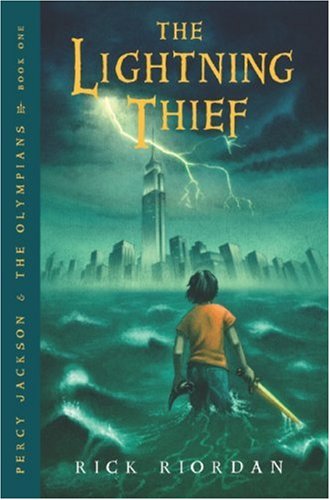
Previously on Percy Jackson and the Olympians: The Lightning Thief: Percy discovers his parentage, is given a quest, nearly gets killed once, nearly gets killed again, meets the god of war, and nearly gets killed a third time. He’s been busy!
(Dudes, while I’m on the topic of “things I loved in the 2000s”, the new Evanescence album is so good. Just throwing that out there.)
We’ve now rolled into Vegas, and the truck drivers come to release the animals, cackling villainously about how very much they don’t care about animal rights. One of the animals, a zebra, begs Percy to free them, and Percy realizes he can speak to the zebra because of Poseidon’s connection to horses. Okay, as a former horse girl, I am jealous >:( Percy doesn’t even own The Secret of Shadow Ranch!!! He doesn’t deserve this!!!
Our trio frees the animals and Grover places a “satyr’s blessing” on them so that they’ll conveniently find food and shelter, lest we wrestle with the sticky moral decision of freeing a bunch of malnourished animals into a desert without any herd protection. Although this does give us the exchange:
“Why can’t you place a blessing like that on us?” I asked.
“It only works on wild animals.”
“So it would only affect Percy,” Annabeth reasoned.
Hee.
They wander a bit and come across a place called the Lotus Hotel and Casino. Lotuses, you say? Once again, nobody notices this, and they happily go in and immediately forget what they’re doing and where they’re going. They party in the casino for a while, until Percy sees a guy who “wore bell-bottom jeans and a red T-shirt with black piping, and his hair was permed and gelled like a New Jersey girl’s on homecoming night.” Ayyy New Jersey mentioned! Percy chats with him and the guy tells him that it’s the year 1977 and has he ever seen that new movie, Star Wars? (Maybe not that last part.) Percy realizes that all the “guests” have been stuck inside for decades and the casino is a trap. They bail out of there and realize they spent five days inside, and they now only have one day to finish their quest. It’s over in less than ten pages — like I said, I didn’t realize how fast-paced this book really was until I reread it! (The TV show pads it out a bit by having Percy meet Hermes, aka Lin-Manuel Miranda, at the hotel, but this doesn’t happen in the book.)
(By the way, remember how I said Percy killing Medusa with a 5th-generation iPod was one of the two things the 2010 movie did right? The only other thing — and the best part– is the absolutely masterful use of “Poker Face” in the Lotus Casino scene.)
They flag down a cab to drive them to Los Angeles, paying for the fare with their casino debit card. When the driver swipes it, an infinity symbol comes up, and for some reason he buys that this means they have unlimited cash instead of like, the card being fake. Well, whatever; the extremely gullible cabbie drives them all the way to LA (about a five-hour drive, jeez. I hope he really does get his fare from the Lotus Casino card, because that’s brutal). On the way over, Percy tells Annabeth about Prophetic Dream #342 or whatever, and Annabeth muses once again that it doesn’t sound like Hades is actually our villain. In fact, maybe it’s…no, it can’t be! Percy’s like, “Do you wanna at least share your theory so we’re not taken off guard when it inevitably turns out not to be Hades?” and Annabeth’s like, “No, because that would ruin the surprise.” (They are, by the way, incredibly casual about tossing Hades’s name around in this scene despite fast approaching his domain. So much for the whole “Don’t call gods by their names” thing.)
A Muggle mortal recognizes Percy but doesn’t remember that he’s the country’s most dangerous seventh grader, so that moment goes nowhere. Our trio wanders the streets, looking for the entrance to the Underworld, but its mortal front doesn’t have an address and no one knows where it is. It’s not even in the phone book! Hee. Percy marvels at how confusing and sprawled out LA is (I mean, fair), then they nearly get into a fight with some hoodlums and have to hide in a water bed shop. The shop naturally turns out to be run by a mythological monster (Procrustes, this time) and they nearly get murdered with water beds but then they don’t. The upside is that Procrustes has a copy of the “Monstrous Yellow Pages” with directions to DOA Recording Studios, so without a moment to waste — it’s nearly midnight — they head over. No time for showers, we’re on a deadline here!
DOA Recording Studios turns out to be a waiting lobby to be processed into the Underworld, and the receptionist is Charon (whom Percy briefly mixes up with Chiron. Charon is not pleased to be mixed up with a horse. Hee). Anyway, Charon refuses to let them into the Underworld — they’ve gotta take a number, and there’s a good couple-century wait, you know how it is. Aw, come on, man, all you’re doing is rowing us across a needlessly elaborate stage set, right? Percy smooth-talks Charon into letting them onto the next boat to the Underworld, and again, I enjoy seeing Percy getting to be fairly street-smart! (Minor tangent, I grew up in a city and when I went to college, that was kinda my first time meeting people who had grown up in nicer or more sheltered areas, and it didn’t occur to me that a lot of them would be genuinely freaked out by the more sus areas of our college’s city; they would often legitimately think we were going to get jumped if we walked by a bunch of guys standing at the corner or whatever. Percy’s relative comfort with people who are a little sketchy, like his stepdad or Charon — who’s modernized to be a bit of a mafia type — feels accurate to someone who grew up in an urban area, and again, I like that his background informs his abilities in this way.)
Charon rows them across the River Styx, which understandably freaks them out:
Mist curled off the filthy water. Above us, almost lost in the gloom, was a ceiling of stalactites. Ahead, the far shore glimmered with greenish light, the color of poison. Panic closed up my throat. What was I doing here? These people around me … they were dead.
Annabeth grabbed hold of my hand. Under normal circumstances, this would’ve embarrassed me, but I understood how she felt. She wanted reassurance that somebody else was alive on this boat.
I found myself muttering a prayer, though I wasn’t quite sure who I was praying to. Down here, only one god mattered, and he was the one I had come to confront.
I like this bit a lot! These books tend to go more for action and humor than atmosphere and tension, but every now and then they bust out a nice, descriptive character moment.
When they get to the Underworld, they have to split into two lines for processing — one line is called “EZ Death”, which sends you straight to the Fields of Asphodel, while the other line will take you to the court of the three judges to decide if you’re sent to Elysium/Asphodel/Tartarus. Oh, I know! We have to do a puzzle in front of the judges, and when we solve it, we black out and confront a theater-kid-turned-art-thief, right? Right? Did playing that Nancy Drew game not prepare me for this book? 🙁 In mythology, the judges are three demigods called Rhadamanthys, Minos, and Aiakos, but in this book, judgment duties rotate between various well-known demigods — “King Minos, Thomas Jefferson, Shakespeare, people like that.“ People who…all lived in a time when slavery was legal and women were property? Whatever.* Percy thinks the afterlife looks like “a cross between airport security and the Jersey Turnpike.” I think the way PJO modernizes a lot of concepts in ancient mythology is often very clever, but it’s also…less whimsical than, say, Harry Potter, and its adherence to 2000s technology or humor can come off as dated or occasionally cheesy. Which, again, isn’t stopping my enjoyment of it! Just noticing, I guess.
(* Jokes aside, I think I see the overall concept here, which is that Elysium is for people who accomplish extraordinary things, even if they were perhaps less-than-admirable in other areas of their lives. That said, as an adult, I find myself thinking less “It was depressing how few people did good in this world”, as Percy does re: Elysium, and rather that the vast majority of people are a mix of good and bad, and even just quietly doing what is right is often not easy. Many people who go down in history for doing great things also had dark sides, or lived in times when things like racism or child labor were normalized — do their good deeds cancel their complicity out? Are there people in Elysium for being consistently good and kind, even if they didn’t make history? From my limited knowledge of it, I suspect Greek mythology posits that extraordinary heroism is more important than quiet kindness, but then, why are we relying on the morals of Ancient Greece — famously lovers of slave labor and pederasty — to decide? Why does someone as flawed as Thomas Jefferson get to judge whether or not you got to hell anyway? You know?) (I mean, I don’t expect this middle-grade book to answer any of these questions; I’m just thinking out loud again.)
Anyway. After making it through the EZ Death line, they encounter Cerebrus, a three-headed dog that they must devise a way past. Middle-grade readers have certainly never seen that one before, although in fairness to PJO, Cerebrus is directly from Greek mythology. Annabeth distracts Cerebrus by playing fetch with him for a minute; the book hints at some sad backstory there (she mentions her family used to have a Doberman and gets emo over it) but we never find out what it is, exactly. Cerebrus is thrilled to be played with, and Percy thinks, Even here in the Underworld, everybody—even monsters—needed a little attention once in a while. And that’s our lesson today on Out of the Box, I guess?
Shuffling further into the afterlife, Percy sees people being tortured in Tartarus — “people being chased by hellhounds, burned at the stake, forced to run naked through cactus patches or listen to opera music.” Percy, there are worse things than opera. Like shoegaze. On the other side, they see Elysium and the Isles of the Blest, which is where all the cool demigod heroes go, and obviously where Percy and Annabeth want to end up one day.
Suddenly, Grover’s winged shoes start taking off without his volition, dragging him down towards a dark pit from which Percy is sensing Very Bad Juju. Let’s be real, has anyone ever sensed anything good coming out of a creepy dark pit in hell? Percy and Annabeth drag him back, nearly getting sucked in themselves. Percy thinks that he’s so tired, even his backpack feels heavier. Annabeth almost says what she thinks is going on but then she doesn’t.
They go to see Hades, who protests that he isn’t behind the lightning bolt theft: a war wouldn’t benefit him at all! He doesn’t want more dead people! His job is soooo busy already and the Underworld is running a budget deficit, you know, this isn’t the ’90s anymore! He’s all, “J’accuse!” because not only did Percy steal the lightning bolt, he also stole Hades’s Helm of Darkness! Percy’s like, “Your helm of what?” and Hades snaps at him not to play dumb. Percy clearly has the lightning bolt, and in fact, why doesn’t he open his backpack and see for himself? When Percy does, he realizes that the weight he was feeling was the lightning bolt, which has magically appeared inside his bag somehow. He slowly starts to put together that if the lightning bolt was in the backpack, and he got the backpack from Ares…
Let’s not get into that right now, though. Hades shows Percy a vision of Sally, and cackles that he had the Minotaur kidnap her to lure Percy to him. He’ll let her go in exchange for the lightning bolt and/or the helm. Uh…why does Hades suddenly want the lightning bolt, though? He’s insisting he didn’t steal it, but if it ends up in his possession, everyone will definitely think he stole it, which will lead to a war, which Hades doesn’t want. I guess the point is that gods are just so petty that Hades is going to start a war anyway because of The Indignity Of It All or whatever.
Anyway, Hades also knows Percy only has three deus ex machina pearls from Poseidon, so if he tries to take a third option and escape with his mom, one of our heroes will have to stay behind. Grover and Annabeth immediately try to heroically sacrifice themselves, but in a nice twist, Percy doesn’t fall for the bait. He knows his mom wouldn’t want him to start a war just to get her back, so he promises to come back for her, then keeps the pearls for our trio. (Later books — and the TV show — make a big thing over Percy’s fatal flaw being personal loyalty and that he’ll burn the world for his friends and family, but he’s actually pretty pragmatic in the earlier books, which I really like.) When they smash the pearls, bubbles of water come up around them and rocket them to safety back at the Santa Monica beach. We exploded on the surface, in the middle of the Santa Monica Bay, knocking a surfer off his board with an indignant, “Dude!” Hee.
Ares is waiting for them on the beach, and Percy’s all, “J’accuse, again, some more!” He’s figured out that Ares is behind the theft of both Hades’s helm and Zeus’s lightning bolt — gods can’t steal each other’s weapons, so Percy figures a demigod must have done it for him. (“Who did you use? Clarisse? She was there at the winter solstice.” Ares doesn’t actually reply; file that away for later.) Regardless of what happened, as long as Percy doesn’t actually get the lightning bolt back to Zeus in time, everyone’s going to blame each other for the theft and the world will descend into war, which is of course what Ares wants. Mwa ha ha! Of course, you’d think he’d just keep the master bolt for himself, since it’s so powerful. Ares is like, “Huh. Yeah, why didn’t I do that?” Percy realizes that ~someone else~ is giving Ares orders — Zeus initially tasked Ares with getting the bolt and the helm back; when Ares found the thief, he switched sides and started helping the thief instead.
Ares obviously doesn’t like any of this and he’s like, great deduction, I’m going to have to kill you now. Man, this is just like the end of a Nancy Drew game 🙁 Percy challenges Ares to a duel: if he wins, Ares hands over the helm and lightning bolt; if he loses, Ares gets to…kill them all, I guess. Grover and Annabeth are like, “…I’m sorry, are you going to try to win a fight with the literal god of war?” Annabeth nevertheless gives him her camp necklace for luck, and Grover gives him a tin can. Thanks, guys. Ares sneers at the power of friendship, but weirdly he does also seem to forget that he’s trying to fight a son of the sea god right on a beach. The water boosts Percy’s fighting ability and he manages to draw blood, defeating Ares. (In fairness, Percy isn’t totally overpowered: he admits Ares could still kill him, but something seems to be stopping him.) Ares curses Percy with disadvantage on his attack rolls every time he goes into combat, but this doesn’t seem to actually affect any of Percy’s fights in the rest of the series, so whatever. Ares then disappears, leaving the helm. The Furies descend, agree to stop trying to kill Percy, and take the helm back to Hades.
Then, weirdly, Percy and Annabeth exchange glances and agree that they know what’s going on. You guys do? Because like…I know what’s going on because I’ve read this book before, but I’m not sure how Percy figured it out in the past five minutes.
There’s also a massive crowd of people and cops watching this, but apparently the Mist convinces them that Ares had kidnapped Percy, Grover, and Annabeth, and he was behind all the shenanigans that occurred on their journey west, until Percy defeated him in a gunfight at the beach. Percy is exonerated, not that we ever got the sense that he was really in much danger from the mortal world to begin with. He sniffles to the news reporters that he just knows his stepfather will want to reward the good people of LA with free appliances from his store, for helping find Percy, and gives them Gabe’s number. Heh.
Since they have to get back to New York by the end of the day, our trio sucks it up and takes a plane back, hoping Zeus won’t zap Percy out of the sky given the circumstances. Percy sends Annabeth and Grover back to camp to tell Chiron what happened; he goes alone to deliver the bolt to Zeus because it’s more dramatic that way.
Percy goes to the Empire State Building and demands to see Zeus. The guy at reception gives him a magic elevator key card or whatever, and tells him to insert it when no one else is in the elevator. Uh…is there supposed to be a time when people aren’t visiting the Empire State Building? It’s open to tourists until 12 AM! (By the way, the book doesn’t really give a sense of what time it is, but I’m guessing it’s maybe early-mid evening? Percy goes to visit Hades in the wee hours of the solstice; presumably his fight with Ares takes place sometime in the morning-early afternoon; a flight from CA to NY takes about five-six hours. Anyway.)
Percy arrives in Mount Olympus and is blown away by how majestic it is — Hawkers in the market offered to sell me ambrosia-on-a-stick, and a new shield, and a genuine glitter-weave replica of the Golden Fleece, as seen on Hephaestus-TV. One thing that’s super interesting is that this is very evocative of the parallel-magic-world aspect of a lot of fantasy fiction (not just HP, although Diagon Alley definitely comes to mind), and despite mentioning it here, it really doesn’t…come up very often in these books (or at least in the main series). Percy spends a lot of time at home or on quests; we don’t actually see much of Olympus or get a sense that Camp Half-Blood has a kind of parallel culture where all the kids watch Hephaestus-TV or want the latest Greek armor instead of — [Googles popular 2000s toys] — Halo 2 or whatever. I don’t know, I don’t have an opinion on whether it’s good or bad; it’s just interesting to notice.
Anyway. Percy makes his way to the gods’ throne room, where Poseidon and Zeus are sitting. Poseidon kinda sorta defends Percy against Zeus, but isn’t overly affectionate — to Percy’s relief: If he’d tried to apologize, or told me he loved me, or even smiled, it would’ve felt fake. Like a human dad, making some lame excuse for not being around. I could live with that. After all, I wasn’t sure about him yet, either.
Percy tries to explain that Ares isn’t our main villain, but Cornelius Fudge Zeus doesn’t wanna hear it and is like, “Welp, I have my bolt back, everything is coming up Zeus!” before he swans off. Percy tells Poseidon that their real villain is Voldemort Kronos, who’s…Percy’s grandfather, technically, I guess. The Titans are trapped under Tartarus; Kronos, as their leader, must be orchestrating their comeback and revenge on the gods who overthrew them. Poseidon’s like, “Yeah, well, Zeus isn’t going to have that conversation, so we should just not talk about it.” Like…at all? Okay, sure.
Poseidon tells him that Hades has returned Percy’s mother, so he should shuffle on back home, with zero closure re: what he wanted to talk to his dad about. I mean, it’s not an unrealistic depiction of what meeting up with your estranged father is like. Jokes aside, Poseidon does tell Percy he’s proud of him and notes that he is a “true son of the Sea God”, and they part on hopeful terms.
Back in the mortal world, Percy returns home and is overjoyed to find his mom waiting for him. Their reunion is cut short by Gabe, however, who yells at Sally to make him a sandwich. He’s not at all pleased that Percy is back either, and he demands Sally kick him out. When she refuses, he raises a hand, and Percy realizes that Gabe has been hitting her. Oof. That’s dark — very realistic, but dark, maybe surprisingly so given how wacky this book has been so far.
Sally and Percy escape to his room, and Percy sees that the gods have Returned to Sender the package containing Medusa’s head. (This is such a minor nitpick, but I gotta point it out because it pertains to my job — that’s not how Return to Sender works! It would go back the original address, which is Medusa’s, not Percy’s. The gods had to pay for a new shipping label!) Percy offers to use it on Gabe to save his mom, but Sally refuses, saying she has to make her own decisions and save herself, though she frets that she needs more time to work up the courage. Percy says, “Mom, just tell me. That jerk has been hitting you. Do you want him gone or not?” Hmm. I think Sally’s indecision is realistic for a woman who’s been abused for over a decade; on the other, I don’t like that it comes off a bit like her twelve-year-old son has to lay out her situation for her, as though she doesn’t know.
(Also weirdly, Percy grapples for a whole paragraph about how, after he’s seen the afterlife, he’s not sure he really has the right to send Gabe there, even if he wants to. “A month ago, I wouldn’t have hesitated,” he thinks. “Now…” Now, I guess he means he’d hesitate for a paragraph, because after that ruminating he turns to his mom and is like, “Yeah, I can still petrify him for you if you want.”)
Percy decides to go back to Half-Blood Hill and let his mother make the final decision. The book acts really dramatic about how he might be going back ~*~forever~*~ and Percy notes that he has a feeling he’ll never see his bedroom again, but I’ll mildly spoil it for you and tell you that’s just because his mother moves by the next book.
Back at Camp Half-Blood, our trio gets a heroes’ welcome, and they also get to burn the burial shrouds that their fellow campers made for them since they were pretty sure they were gonna die on the quest. Hee. Annabeth’s shroud was so beautiful—gray silk with embroidered owls—I told her it seemed a shame not to bury her in it. She punched me and told me to shut up. Also hee.
Now that he’s a hero, Percy’s getting along with most of the other campers (except the Slytherins Ares kids, who are not happy that he disgraced their father), and Grover’s redeemed himself by helping Percy on his quest, so he’ll get his searcher’s license after all. Sally sends Percy a letter, saying Gabe’s disappeared and she’s just so happened have sold a life-size statue of a poker player to an art gallery, who paid her enough that she moved to a nicer apartment, gone back to school, and has enrolled Percy in private school — should he want to come home, of course. Everything’s coming up Percy!
Grover sets off on his search for Pan, and Percy and Annabeth say goodbye to him. Percy is depressed since, if you recall, no searcher has ever come back from their quest for Pan. Annabeth’s like, “Don’t worry, this is only the first book of a five-book series, we’ll see him again.”
Percy spends the rest of the summer having a grand old time, although he feels vaguely uneasy that the Oracle’s prophecy didn’t seem to entirely pan out. Was there more to it? Let’s not think about it, though; finally the last day of camp comes and he has to decide whether to go home or not. He’s still unsure — on the one hand, camp! Monsters will stay away from his mom! He gets to learn swordfighting instead of algebra! (Which does bring up the question, do demigods who live at camp full time like…have any education beyond the seventh grade? Annabeth’s situation gets handwaved because she’s an Athena kid and naturally smart, but what about everyone else?) On the other hand, if he doesn’t go to normal school, he might end up a social maladjust like Annabeth or Clarisse. Horrors!
(Another interesting way this book majorly differs from Harry Potter is that Percy refers to leaving camp for “home” — he never thinks of camp as his real home.)
Percy decides to go swordfight for a bit to clear his head. He finds Luke down by the training area, playing with his new sword — which is made of both celestial bronze and steel, so it can hurt both mythological creatures and mortals. Percy’s weirded out that Luke would want to harm mortals, but agrees to hang out in the woods with him anyway.
As they hang, Percy gets more and more creeped out by Luke, who’s acting weirdly salty and bitter, culminating with throwing his trash into the creek. Littering is the mark of a true villain! Luke cackles that it doesn’t matter, because he’s not coming back to camp — and in fact, neither is Percy, because he’ll be dead! Gasp, shock! Luke is evil!
Luke summons a deadly scorpion (somehow? Is that a Hermes power?), which bites Percy. Percy realizes that the “You will be betrayed by the one who calls you a friend” part of the prophecy was referring to Luke. He’s all, “Curse your sudden but inevitable betrayal!” and Luke’s like, “Don’t reference Firefly and my father, Nathan Fillion, in front of me!!!”
Luke evils that the gods don’t care about them — look at how many kids get abandoned, or even if they’re claimed, largely ignored by their godly parents. His villain origin story is that a few years ago, Hermes gave him a quest to steal a golden apple, a la Heracles, which Luke found embarrassing because his father didn’t even care enough to give him an original quest. Luke posts on the Internet about how much he hates remakes too, I guess. Anyway, he failed the quest — he claims it’s because his heart wasn’t in it — and that just convinced him even more that the gods suck, and Western civilization sucks, and we should burn it all down! Heh. This was more dramatic in 2000s; now I’m just like, “What is he, an Internet communist?”
Luke explains that after he failed his quest, Kronos started coming to him in his dreams and whispering to him that the West is bad and capitalism is bad and has he ever heard of this guy called Hasan Piker? Luke stole the lightning bolt and Hades’s helm on Kronos’s orders, but Ares caught him before he could deliver them to Kronos. Kronos told Luke what to say to convince Ares not to turn him in, namely that stealing this stuff would cause a huge war and Ares likes war, right? Ares was like, “So true” and agreed to help Luke. Meanwhile, Luke started having visions that some hapless demigod was going to come to camp soon, and he’d be dumb enough to let Luke manipulate him into carrying the lightning bolt the rest of the way to Kronos. Rude 🙁
Percy realizes that Luke let the troll hellhound into Hogwarts camp (to encourage Chiron to send Percy away on his quest), and he jinxed Harry’s Nimbus 2000 Grover’s flying shoes, so that they would drag the wearer down into Tartarus — of course, he’d been banking on Percy wearing the shoes. (Luke: “Grover messes up everything he touches.” Heh.) Percy tells Luke he’s disrespecting Thalia’s memory, and Luke flips out that this is revenge for Thalia, too, because the gods let her die. Then he’s like, “Alright, that’s enough explanation of the plot,” launches the scorpion at Percy, and disappears. (Also…somehow. I can kinda see why Luke sided with Kronos. He has cool inexplicable powers now!)
Percy manages to kill the scorpion, but it’s already bitten him. He makes it close enough to the camp for the tree nymphs to drag him back, then he blacks out. When he comes to, he’s in the hospital wing camp infirmary with Chiron and Annabeth, and he explains to them that Voldemort Kronos is trying to come back. He figures out that there’s a big spooky prophecy about the fate of Olympus and the Western world and Percy is one of the major players in it. Chiron tells Percy that they’ll train him for when the time comes, but right now, he should let the adults handle it. Percy does not like that at all, and he and Annabeth agree that next summer, they’re going to go find and stop Luke no matter what.
The reason they have to wait until next summer, of course, is because Annabeth took Percy’s advice and tried to make up with her dad. She’s going to live with her family for the upcoming school year; Percy decides that he too will go back to the mortal world for the school year. He and Annabeth agree to IM during the school year — Iris Message, that is, har har har. Percy wonders if Poseidon approves of his choice and tells him that he’ll survive until next summer — “After all, I am your son.” Aw, that’s a nice note to end on.
Rereading this book was a trip, because not gonna lie, I had straight-up forgotten most of what had happened — I mean, I remembered bits like Medusa, jumping from the St. Louis Arch (admittedly, because the TV show reminded me about that bit), the Lotus Casino, etc — but I’d forgotten how they were linked together or how quickly the book moves between them. Some of the big moments I remembered lasted for, like, five pages before the book moved on.
There was more meaty stuff in the books than I remembered, too, or at least the suggestion of some interesting themes and dynamics. I like the running theme of parental abandonment and kids seeking their parent’s approval a lot. Percy and Annabeth’s relationship is more interesting to me as an adult, too — I read them as a kind of basic, bickering, tsundere-girl-clueless-boy relationship as a kid, but there’s some interesting stuff with the way Annabeth trusts (and has a crush on) Luke first, only for him to betray the camp, and Percy — someone Annabeth is supposed to be rivals with — supplanting Luke as Annabeth’s confidante.
Of course, I’ve read the rest of the books and none of this stuff actually gets explored, but the potential is interesting to me anyway!
THE END.
Leave a Reply